
Expect the future of technology to make life even easier for humans like robots dispensing medication, self-driving tractors for farmers and, yes, flying cars.
Those products and more will be introduced this week at the CES all-things-tech trade show, which kicks off Tuesday and runs through Friday in Las Vegas.
More than 170,000 people are expected to descend on Las Vegas for the four-day technology show — Southern Nevada’s largest annual trade show by space and attendance.
CES is open to the technology industry, but not the general public.
Here is some of what’s to come:
Health
According to a consumer tech forecast from the Consumer Technology Association, which sponsors CES, digital health devices are set to be a $10.6 billion market in 2020.
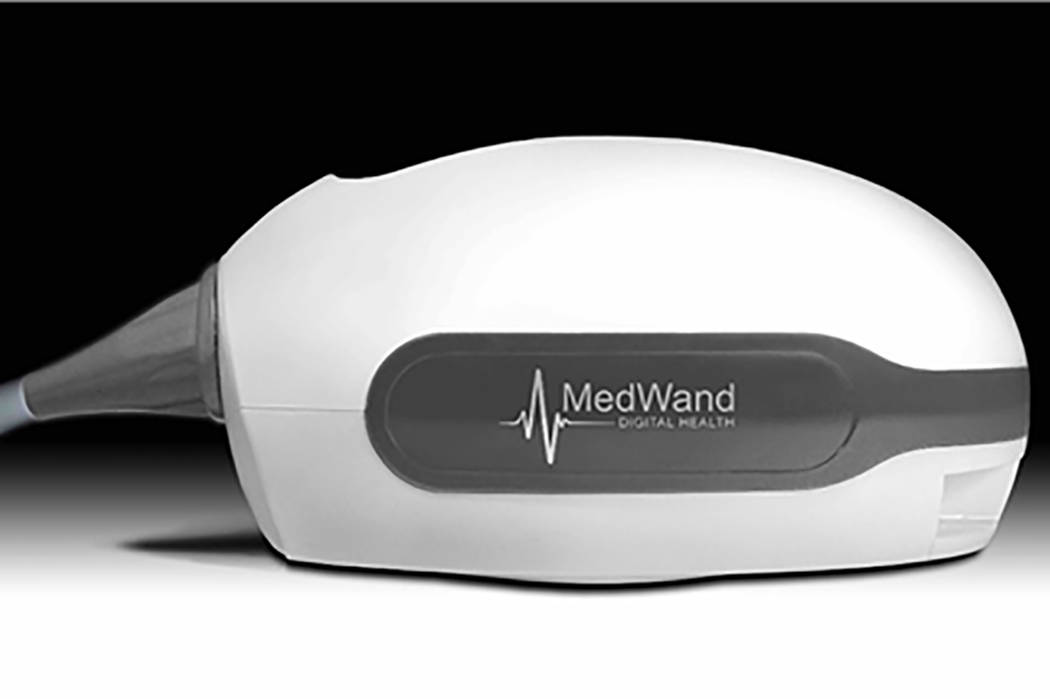
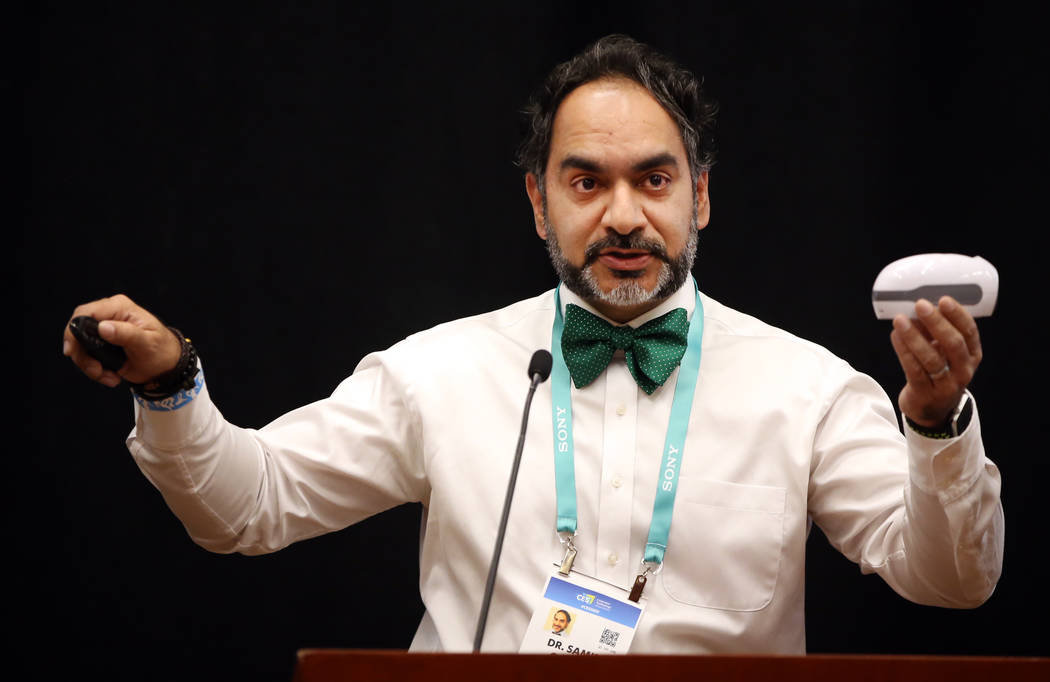
Las Vegas physician Dr. Samir Qamar introduced the MedWand at the event. Likening it to the tricorder device from “Star Trek,” the MedWand combines a stethoscope, thermometer, EKG and about seven other diagnostic devices in one hand-held item. The pocket-size device allows patients to be analyzed by their doctors from anywhere in the world.
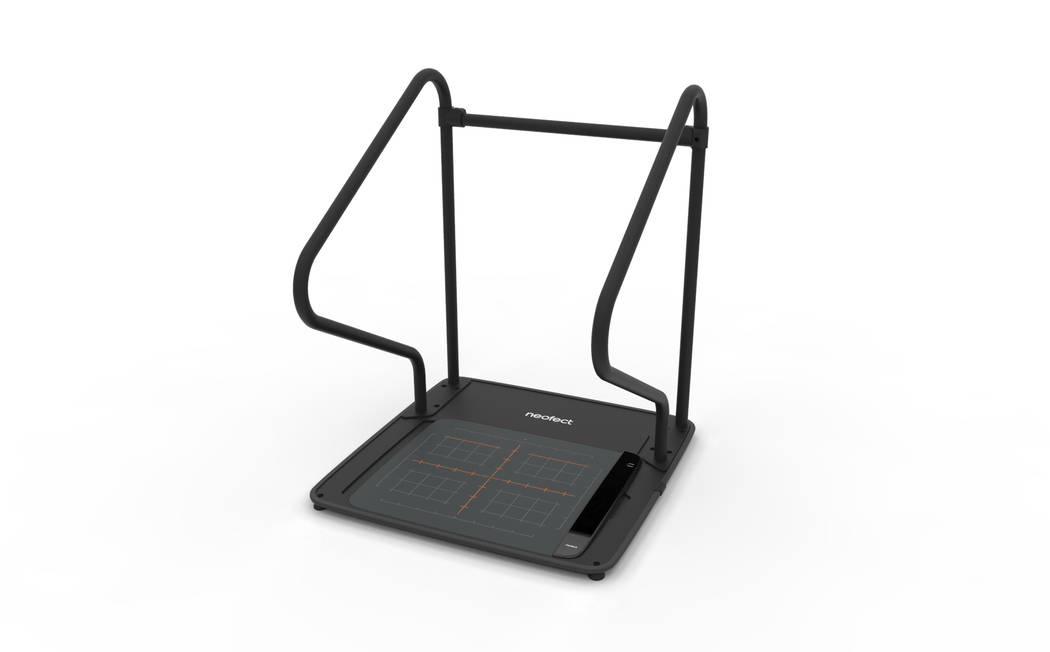
Scott Kim, CEO of Neofect USA, also introduced the “smart balance,” a lower-limb exercise rehabilitation device for stroke survivors. Kim likened the device to the “Dance Dance Revolution” game.
“Stroke survivors can work on their re-stabilization as well as re-balancing,” he said. “Patients, patients’ family and clinicians can monitor the progress all together.”
DNANudge introduced a wearable tracker to analyze activity and determine which food brands are best for an individual’s body. Users enter a saliva swab into a cartridge mailed to their home which will examine which chronic diseases that person is most likely to develop.
The wearable bracelet, or DNABand, will then update based on daily activity and tell users which foods and brands are healthiest. Dr. Maria Karvela, the chief scientific officer who developed the data, said she scanned various brands of salted peanuts to explain how some barcodes flashed a green light on her DNABand and others a red light, indicating what her body should be consuming.
“DNA is one thing, its fixed, but by having an active lifestyle then you can overcome it,” she said.
Also on display Sunday was the Mateo health mat, a device that replaces the bathroom scale with additional high-tech features.
The mat has 7,000 sensor points and based on a users posture on the mat, it will produce health tip recommendations, foot advice, exercises and other tips. The mat will be available later this year for $179, said company co-founder Lenny Dahan.
Family tech
Baby tech and digital health producer Jill Gilbert said consumers are living in an era that is transforming parents’ lives.
“Smart parents are just demanding smart tech,” she said.
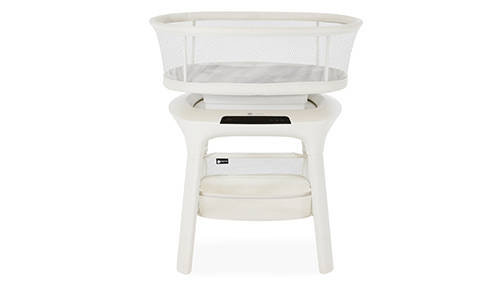
Pittsburgh-based company 4Moms unveiled its newest device, the mamaRoo sleep bassinet, which aims to help babies fall asleep and stay asleep longer. The device has five motions and speeds, four built-in white noises, a vibration mode and is app-controlled through Bluetooth connection.
Lovot is a human companion robot that runs around the home and squeals for attention. Lovot, produced by Tokyo company GROOVE X, focuses on physical contact by giving off warmth in an 18-inch fuzzy penguin-shaped creature. Using facial recognition in the one billion eyes around the body, Lovot will roll toward loving faces.
This is LOVOT, a robot created by GROOVE X as a human companion. He has one billion types of eyes, according to the company‘s website. #ces2020 #CES pic.twitter.com/4FKApmvg0G
— Sabrina Schnur (@sabrina_schnur) January 6, 2020
The creature will run around memorizing the layout of a home for 45 minutes before rolling itself back to the charger for 15 minutes.
Lovot expects to expand to China and then the United States within a year.
Fitness and wearable tech
This will be the 10th year fitness and wearable tech has been featured at CES.
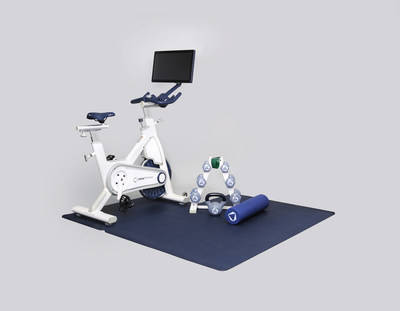
Herberto Calves, president of MyxFitness, announced the company’s newest offering: a digital-only service on Apple and Android devices that will start in April. This comes after the company announced the launch of its in-home fitness equipment and on-demand digital classes in November.
Julie Sylvester, a producer for sports and fitness tech, also ran through a list of new product launches in this category, including: the Manta5, a “half bike, half plane jet ski” that replicates cycling on water; the brain-computer interface BrainUp; the LifeLeaf noninvasive glucose monitor; the Orcan Hear class of wearable AI that augments and integrates with hearing aids; Circular, a smart ring with biometric tracking; and Tech Air, a motorcycle jacket with a five airbag system.
There’s also the Ivea Twin C smartwatch that collects environmental data and shares it with climate change scientists, and Wearin’, a wearable connectivity solution that maximizes safety and performance of humans in industries like construction and health care.
“We are CES-ready to move into the wearable tech future,” Sylvester said.
High tech retailing
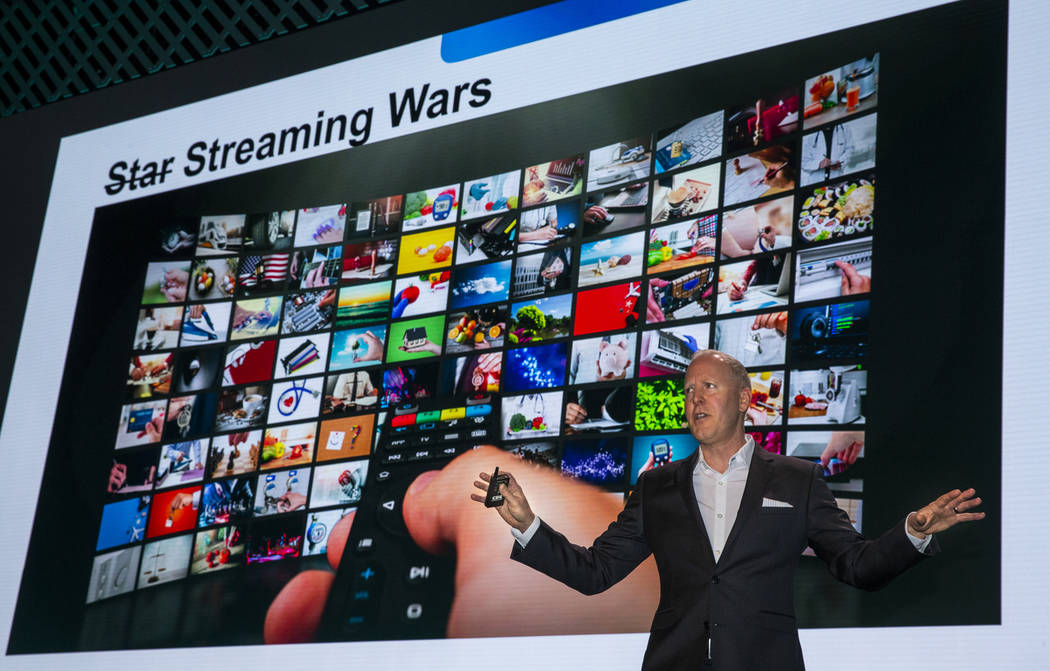
Robin Raskin, founder of Living in Digital Times, said the spread of 5G service will help the retail industry move toward “frictionless retailing,” when consumers make a purchase without cash or a credit card — similar to ordering an Uber or Lyft through an app.
She also mentioned a move toward personalized shopping experiences, when companies use data to tailor products and create more satisfied and loyal consumers.
“Beauty is really leading the pack in creating personalized shopping experiences,” she said before introducing Logan McGill, senior marketing manager of SkinTech, Neutrogena.
McGill introduced the next generation of Neutrogena Skin360. The free app can process over 100,000 skin pixels and recommends skincare products.
“Looking at our consumers, not one is the same,” McGill said. “We’re here to help our consumers understand how to manage their skin and achieve their best skin health.”
Automotive
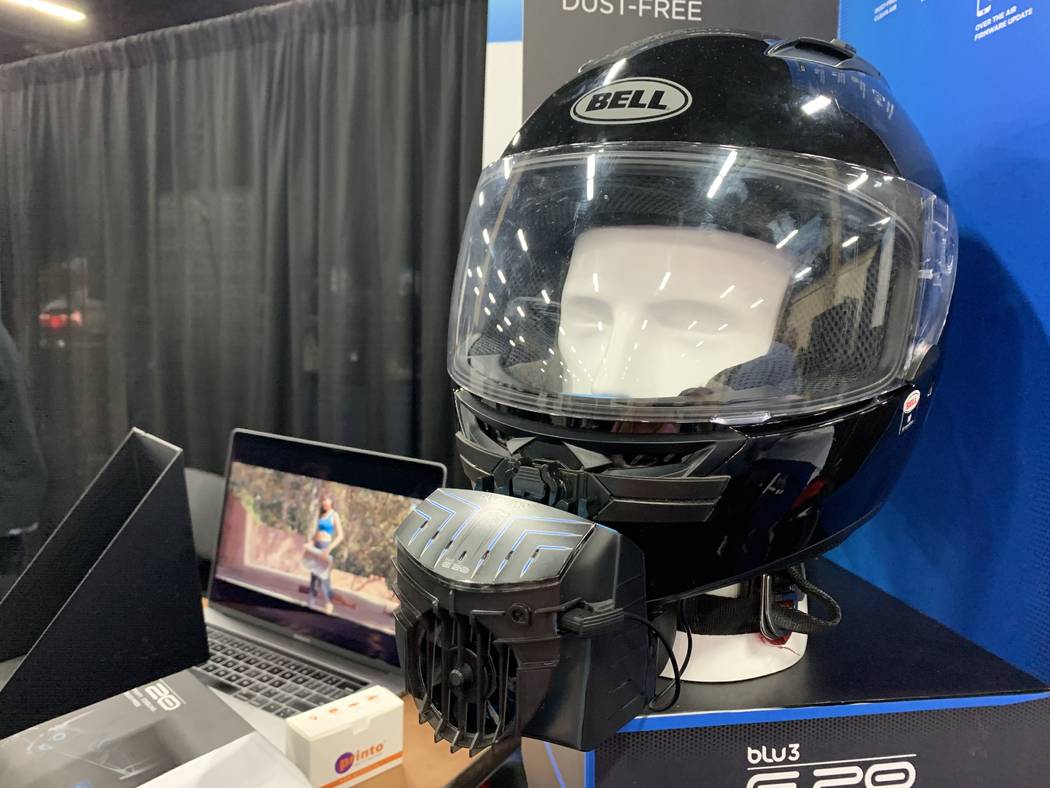
BluArmor was designed to bring car-like comfort to motorcyclists, according to spokesman Arvind Prabhakar.
“When you buy a car, you never stop to wonder whether it will come equipped with air conditioning or a stereo system, right?” Prabhakar said Sunday evening. “That’s what we want to bring to motorcyclists.”
Made in India, BluArmor helmet attachments come equipped with two key components: a fan with a water-based filter and a bluetooth click pad.
Once the filter is dunked in water for 10 seconds, it can cool down the airflow through the fan for about an hour before it needs to be soaked again, Prabhakar said. The fan has a battery life of about 10 hours, depending on which of the three fan speeds are used.
“Nowadays, everyone has a phone,” Prabhakar said. “We want to make it easy for motorcyclists to have the ease of a car, with nothing more than their helmet, their bike and their phone.”
The click pad connects to a user’s phone via Bluetooth and allows cyclists to listen to music, hear their messages read to them and dictate message responses, Prabhakar said.
The attachments will be ready to order in the U.S. in February and will run for $125 to $150.
The Wello solar-powered electric tricycle is a small service vehicle that can be used to run corporate errands in a large plant. Representatives of the French company distributing the vehicle say it can go 15 to 20 mph and will cost about $7,800 (U.S) each.
Contact Bailey Schulz at bschulz@reviewjournal.com or 702-383-0233. Follow @bailey_schulz on Twitter. Review-Journal staff writers Richard N. Velotta, Alexis Egeland, and Sabrina Schnur contributed to this report.
"Spotlight" - Google News
January 06, 2020 at 07:12AM
https://ift.tt/2Fm7Kr5
Digital health, baby tech products in spotlight ahead of CES - Las Vegas Review-Journal
"Spotlight" - Google News
https://ift.tt/34IXLax
Shoes Man Tutorial
Pos News Update
Meme Update
Korean Entertainment News
Japan News Update
Bagikan Berita Ini


0 Response to "Digital health, baby tech products in spotlight ahead of CES - Las Vegas Review-Journal"
Post a Comment